Explore CNC Machining vs Additive Manufacturing in detail. Compare cost, accuracy, materials, speed, and applications to choose the right manufacturing method.
Manufacturers today face more choices than ever when it comes to producing precision components. Among the most discussed options are CNC machining vs additive manufacturing, often framed as traditional manufacturing vs additive manufacturing or CNC machining vs 3D printing.
While both technologies are powerful, they solve very different problems. Understanding when to use subtractive manufacturing versus additive manufacturing can significantly impact cost, lead time, part performance, and long-term scalability.
In this guide, V&S Engineering breaks down the real-world differences between CNC machining vs additive manufacturing, helping engineering, procurement, and operations teams make informed decisions.
Understanding the Core Difference: Subtractive vs Additive Manufacturing
What Is CNC Machining?
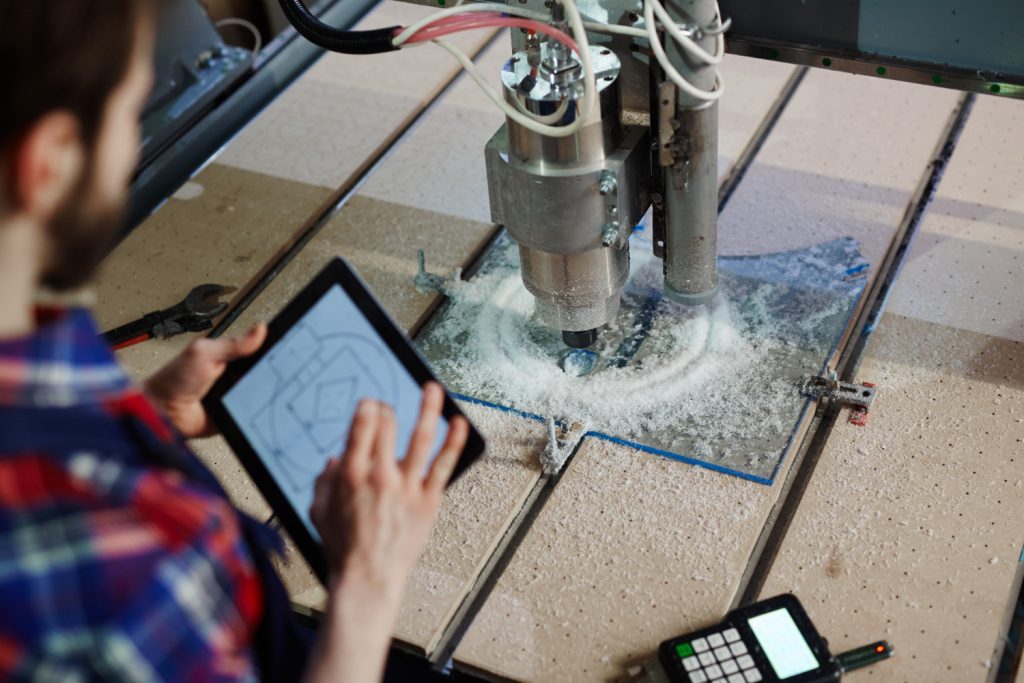
CNC machining is a subtractive manufacturing process where material is removed from a solid block using computer-controlled tools.
CNC Machining Process Overview
- CAD model converted to CAM instructions
- Automated machining using CNC milling and turning
- Material removed with high-precision cutting tools
- Final part achieved through controlled subtraction
Common CNC machining capabilities include:
- Precision CNC machining
- 3-axis and 5-axis CNC machining
- Tight CNC machining tolerances
- Superior CNC machining surface finish
Typical CNC machining materials:
- Aluminum
- Steel
- Stainless steel
- Titanium
- Engineering plastics
CNC machining remains the gold standard for high-accuracy, production-grade parts.