Explore CNC Turning vs CNC Milling, their processes, costs, accuracy, and applications. Learn which machining method best fits your project.
In precision manufacturing, choosing the right machining process can directly impact part quality, cost efficiency, and production timelines. Two of the most widely used methods—CNC Turning and CNC Milling—are often compared, yet many manufacturers still struggle to decide which one best suits their application.
This guide breaks down CNC Turning vs CNC Milling in clear, practical terms. Whether you’re producing high-volume cylindrical components or complex multi-axis parts, understanding the differences between milling and turning helps you make informed, cost-effective decisions.
At V&S Engineering, we work with both CNC milling and turning technologies daily, supporting industries that demand precision, consistency, and reliability.
What Is CNC Turning?
CNC Turning is a machining process where the workpiece rotates while a stationary cutting tool removes material. This process is typically performed on CNC lathes and is ideal for round or symmetrical components.
Key Characteristics of CNC Turning
- Rotating workpiece
- Linear cutting tool movement
- Best for cylindrical and conical shapes
- Efficient for high-volume production
Common CNC Turning Applications
- Shafts and rods
- Bushings and sleeves
- Fasteners and connectors
- Automotive and hydraulic components
CNC turning and milling operations are especially effective when tight tolerances and smooth surface finishes are required on round parts.
What Is CNC Milling?
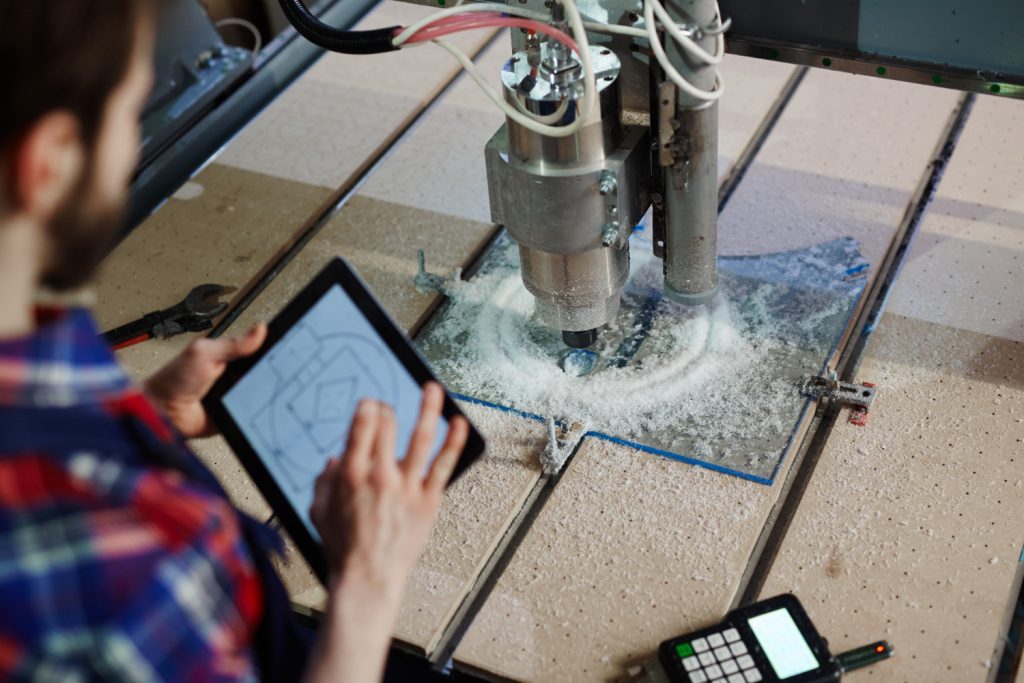
CNC Milling works differently: the cutting tool rotates, while the workpiece remains stationary or moves along multiple axes. This flexibility allows for more complex geometries and detailed features.
Key Characteristics of CNC Milling
- Rotating cutting tool
- Multi-axis movement (3, 4, or 5-axis)
- Capable of complex shapes
- Ideal for precision detailing
Common CNC Milling Applications
- Housings and enclosures
- Brackets and plates
- Complex aerospace components
- Custom industrial parts
Many manufacturers combine CNC milling and turning to produce parts that require both rotational symmetry and intricate features.
CNC Turning vs CNC Milling: A Detailed Comparison
CNC Milling vs Turning – Side-by-Side Overview
| Feature | CNC Turning | CNC Milling |
| Workpiece Movement | Rotates | Stationary or multi-axis |
| Tool Movement | Linear | Rotational |
| Best For | Cylindrical parts | Complex geometries |
| Production Speed | Faster for round parts | Slower for simple shapes |
| Setup Cost | Lower | Higher |
| Design Flexibility | Limited | High |